At a glance
Creator (wanghong / KOL) content is good at drawing attention quickly, while everyday reviews are good at building trust as customers search and compare. Chinese customers rarely decide on one post alone, so it pays to prepare both.
Either way, real experience and accurate information come first. Paid content should disclose the sponsorship in line with platform rules, and clinics and beauty businesses should never promise results.
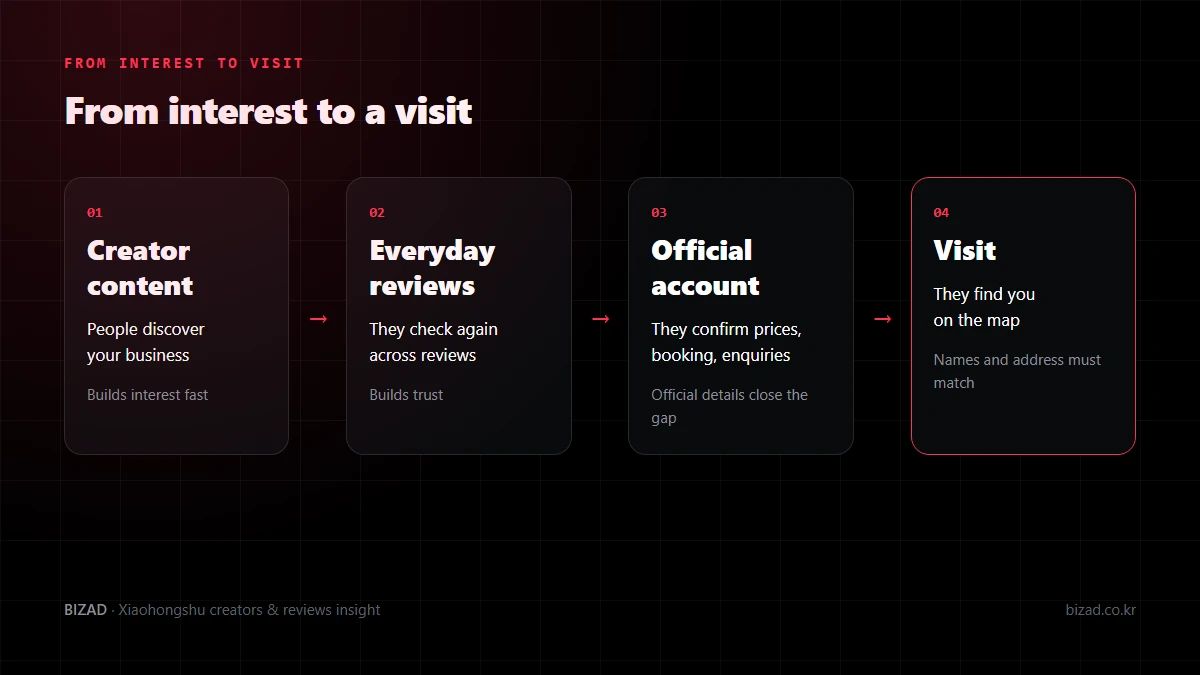
How is creator marketing different from review marketing?
Creator marketing has an influential creator introduce your business to build interest fast; review marketing builds up many visit reports and informative posts that earn trust while customers search and compare. They serve different purposes, so neither is simply better.
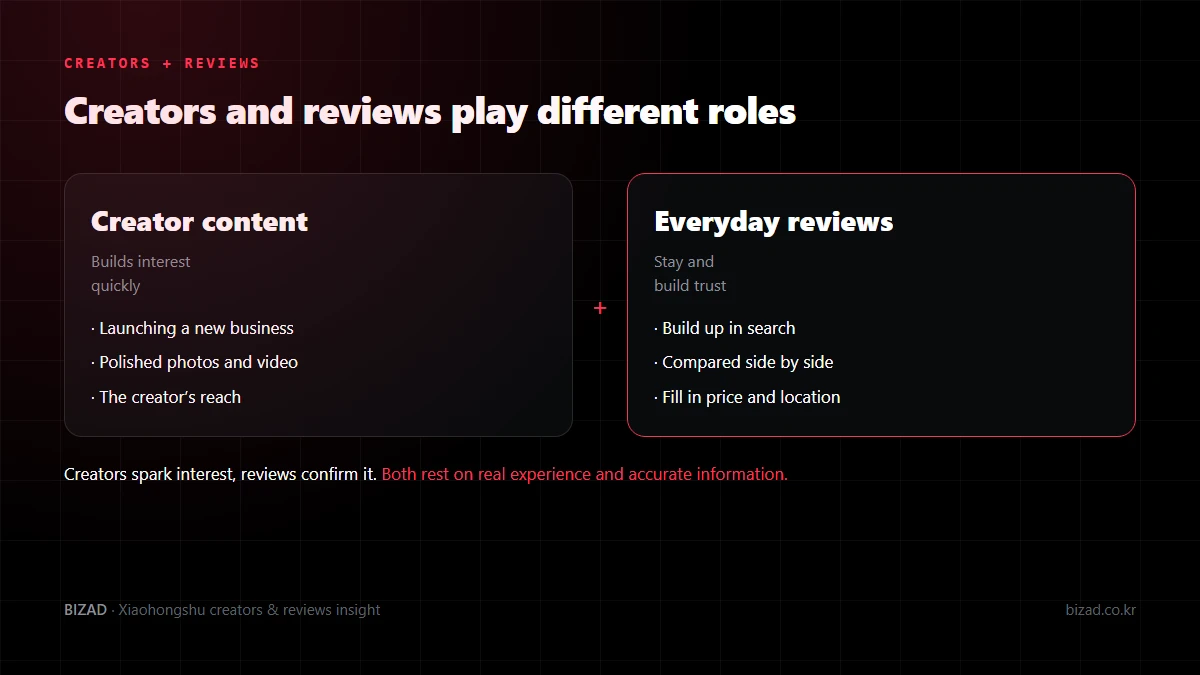
Creator content creates curiosity — “this person recommends it, so it’s worth a look.” Everyday reviews create trust — “lots of people say similar things, so it’s worth considering.”
So when someone who became curious through a creator searches again, they are far more likely to visit if reviews, an official account and map information are already there.
Why do Chinese customers trust Xiaohongshu reviews?
Because they can see real users’ experiences, photos and other people’s reactions all in one place. For travellers choosing places in an unfamiliar country, reviews are information that eases their worries before a visit.
- They feel like real experience rather than advertising, with the dishes ordered, actual prices and waiting times.
- Photos and videos show what a place really looks like, even if the text isn’t fully understood.
- People compare several reviews to see what keeps coming up.
- Comments add details such as location, booking and whether foreigners can use the service.
- People can find reviews from travellers with similar goals.
On the other hand, reviews that repeat the same sentences and photos, or that are nothing but praise, rarely look genuine. Trust builds from many people’s experiences, not from a single post.
Which approach suits your business?
It depends on your industry and goal. To get a new business known quickly, creator content fits; to build a steady base of reviews people find when they search, everyday reviews fit.
| Industry | Creator content | Everyday reviews |
|---|---|---|
| Restaurants & cafés | Quickly show signature dishes and atmosphere | Build up menu, price and waiting-time details |
| Beauty & hair | Show styles and the space | Build up staff, time needed and booking experiences |
| Clinics | Limit to factual, non-exaggerated introductions | Write carefully, focused on consultation and practical guidance |
| Hotels & shopping | Introduce alongside travel routes | Build up real experiences of cleanliness, location and payment |
Whatever your industry, rather than expecting one creator post to bring visits, first check whether there are reviews and official information for customers to find afterwards.
How should you choose creators?
Look first at whether the account fits your customers, not at follower count. A large account in the wrong niche may get a weak response, while a smaller account that organizes information well can lead to saves and enquiries.
- Whether their existing content fits your industry
- Whether they have made content about visiting businesses in Korea
- Whether their photo and video style suits your business
- Whether their Chinese reads naturally without repeated ad copy
- Whether they reply to comments properly
- Whether they follow sponsorship disclosure rules
Before you confirm, agree on the visit date, what can be filmed, the posting deadline, how much editing you can request and how results will be shared. It prevents misunderstandings on both sides.
What should you decide before running a review program?
Start with the goal and what you are offering. Without a goal you end up with impressions like “it was tasty” or “staff were friendly”, which don’t help Chinese customers decide whether to visit.
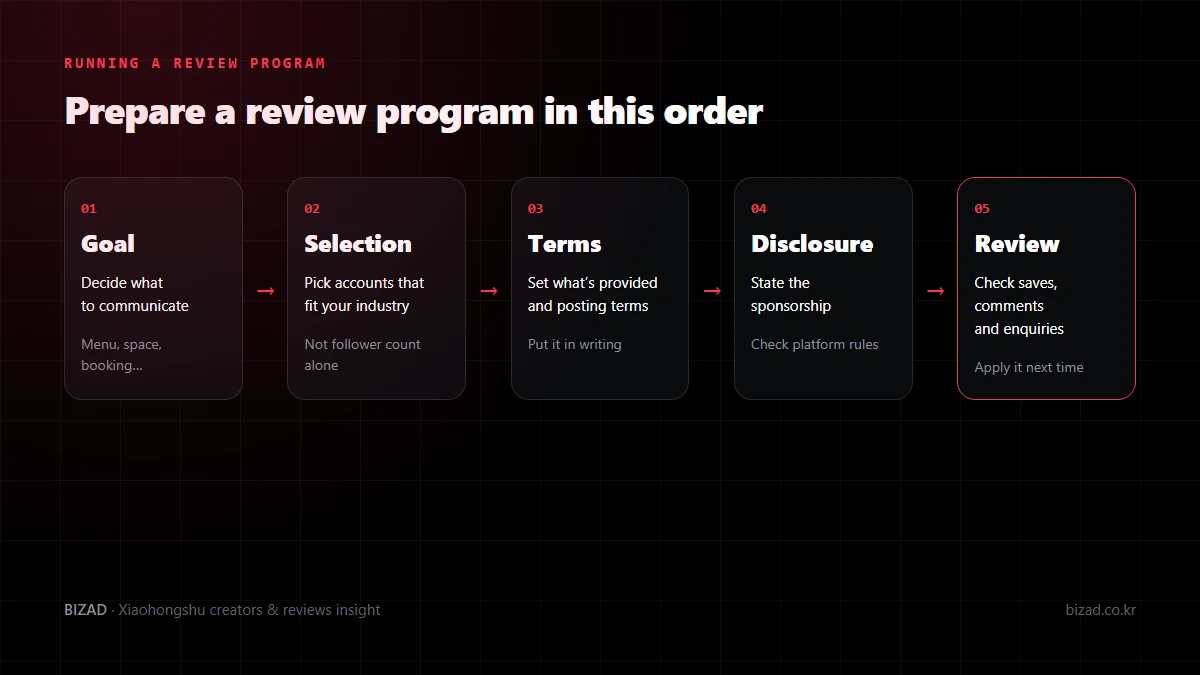
It is best to put the terms in writing.
- Which menu items or services are provided, and the scope
- Whether companions are included, and who pays for extra orders
- Available dates and times, and what can be filmed
- Posting deadline and how long the post stays up
- How far the business may reuse the photos and reviews
Clinics and beauty businesses should make clear whether they offer a consultation only or the actual service, and whether extra costs may apply, to avoid disputes later.
Can you give reviewers content guidelines?
Yes, as long as they only set the direction so that key information isn’t missed. If you dictate the wording too, posts start to look alike and read like ads.
Limit the guidelines to the information that must be included.
- Location and nearest station
- Signature dishes or services, and price range
- Opening hours, how to book, and whether there is a wait
- Whether Chinese-language help is available
- What was good, and what to know before visiting
Leave the tone and personal impressions to the reviewers, based on their real experience. That way, the reviews build up in many different voices.
Do you need to disclose sponsorship or advertising?
Yes, disclosure is the rule. Content made in return for a free meal or service, products, a fee or a discount should make the relationship clear so it doesn’t pass as a spontaneous customer review.
Xiaohongshu is known to have its own rules on commercial collaboration content. How and where to disclose may vary with platform policy, so check the latest rules and relevant laws before posting.
- Free meals, free trials, free products
- Writing fees, travel or accommodation support
- Discounts, invitations for reviewers or creators
Disclosing sponsorship does not make content less valuable. When the relationship is clear and the post carries real experience and accurate information, customers tend to see it as transparent.
Which review mistakes cost you trust?
A mistake to avoid in particular is writing about something you haven’t experienced as if it were a review. If nobody actually visited, make it clear that the post summarizes official information rather than saying “when I went…”.
- Repeating only the positives and leaving out waits, break times or extra costs
- Using photos that make spaces look bigger, heavy retouching, or photos from another branch
- Leaving old menus, prices or changed opening hours in place
- Reusing other customers’ photos or reviews without consent
- Showing customers’ faces, names or booking screens
People come back to saved reviews later, so when information changes, update the post or publish a new notice. Positives create interest; honest notes create trust.
What needs extra care in clinic and beauty reviews?
Above all, never state results as certain. Services that affect the body and appearance vary with each person’s condition, so avoid phrases like “the same effect for everyone” or “no side effects”.
- “The treatment plan may vary with your condition after consultation.”
- “Cost and time needed may vary with the service you choose.”
- “Photos show one person’s case and do not mean the same result for everyone.”
Before using before-and-after photos, procedure footage or consultation details, confirm what the person has consented to. Clinics should check the medical advertising laws that apply before using patient reviews in promotion.
Xiaohongshu creator & review checklist
Check these points before booking creators or recruiting reviewers.
- We have planned separate roles for creator content and everyday reviews.
- We chose creators for fit with our industry and customers, not follower count.
- We set the goal of the review program first.
- We put what’s provided, extra costs and posting deadlines in writing.
- Guidelines cover only essential information and leave the wording free.
- Paid content discloses sponsorship in line with platform rules.
- We never present something we haven’t experienced as a review.
- Photos, prices and opening hours match the current situation.
- We confirm the scope of consent before reusing photos or reviews.
- Clinic and beauty content never promises results, and we have checked medical advertising laws.
In closing
Review marketing on Xiaohongshu is not about collecting lots of nice words. It is about steadily building real experiences and accurate information so Chinese customers can compare reviews and decide to visit.
If creator content has sparked interest, check that the reviews and official information those customers will find when they search again are ready.
We’ll start by reviewing which creators and which review approach suit your business.
Free audit